Usman AnwarI am currently based in Berkeley as part of the OpenAI Safety Fellowship. I am a final year PhD student in the Computational and Biological Learning lab at the University of Cambridge, supervised by David Krueger and funded by the Open Phil AI Fellowship and the Vitalik Buterin Fellowship on AI Safety. I am broadly interested in AI safety and alignment, with a recent focus on chain-of-thought monitorability, especially on detecting encoded reasoning and training for monitorability. I am also quite interested in evaluation awareness, especially in how we can better measure evaluation awareness in LLMs. In the past, I have worked on reinforcement learning, reward modelling and interpretability.
Email /
Google Scholar /
CV
|
|
Publications, Preprints and Blog Posts
CoT monitorability is a really vital tool in assuring agents act safely; however, it is also extremely fragile. My work on this topic has focused on how we can prevent CoT obfuscation from developing during training, how CoT monitorability can be improved via post-training and how we can detect encoded reasoning in LLMs. In orthogonal work on training LLMs to verbalize evaluation awareness, I have shown how to improve monitorability of known misbehaviors when they may not necessarily have a causal influence on the model's behavior.
I am interested in understanding what neural networks actually learn and how reliably we can intervene on them. I have provided mechanistic evidence that model-free RL agents learn to plan using implicit world models, shown that the in-context learning algorithms transformers learn are not adversarially robust and do not match classical algorithms, characterized when chain-of-thought monitors fail using information theory, and examined how well activation steering works in practice.
A constant thread in my work is how to improve the robustness of reinforcement learning methods, especially from the perspective of mitigating reward hacking. Towards that end, I have investigated multiple solutions: (a) mitigating harms from misspecified rewards by learning complementary constraints from human demonstrations, (b) using ensembles of reward models to regularize the learned policy and mitigate overoptimization, (c) using CoT monitoring and a mutual-information-based regularizer to mitigate reward hacking while ensuring models do not obfuscate their CoT, and (d) using regret-based optimization techniques to mitigate goal misgeneralization in RL agents. Separately, I have worked on interpreting reinforcement learning agents and shown that model-free RL agents model their environment and use that model to plan their actions. Finally, I have used reinforcement-learning-based methods to improve the monitorability of known behaviors, focusing on evaluation awareness.
Alongside technical work, I have contributed to governance and sociotechnical questions, such as identifiers for AI systems and a review of the evidence on AI and biorisk.
|
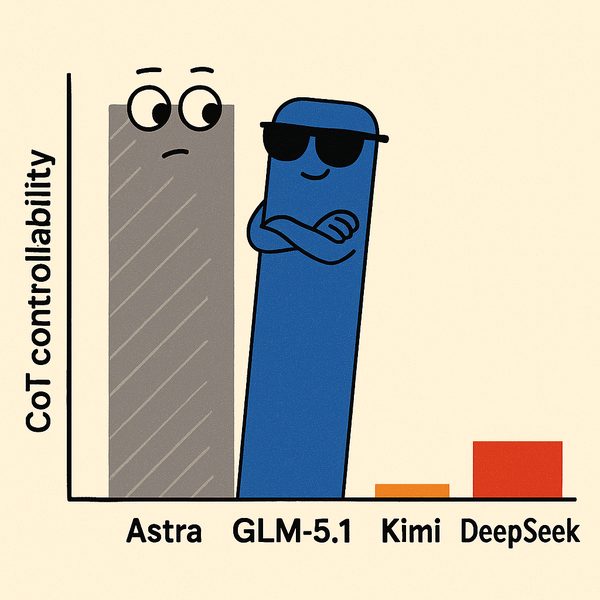
GLM-5.1 Has ~Astra Level CoT ControlUsman Anwar LessWrong, 2026 Blog post We run the CoT-Control evaluation suite on GLM, Kimi and DeepSeek models and find that GLM models are outliers in their ability to control their CoT, yet GLM-5.1 performs poorly at monitor evasion tasks. |
|
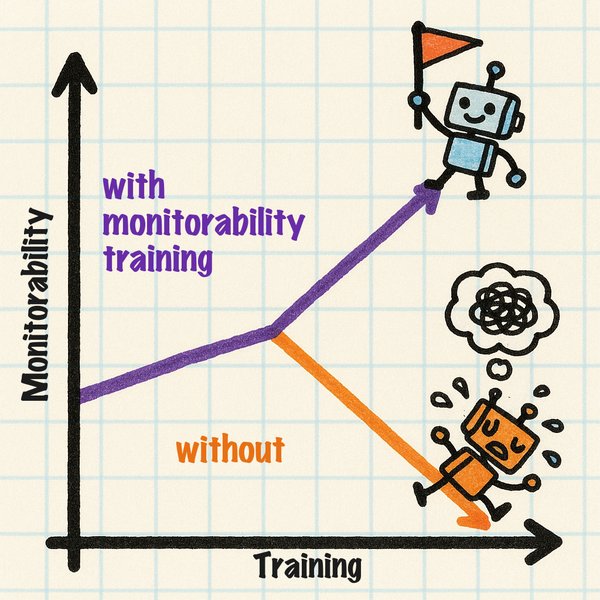
Monitorability Is Trainable: Post-Training for Chain-of-Thought MonitorabilityUsman Anwar*, Tim Bakker*, Christos Louizos, David Krueger We propose an unsupervised post-training objective based on maximizing mutual information between CoT and the output for improving CoT monitorability. Across three model organisms with degraded CoT, it recovers most or all of the lost monitorability. |
|
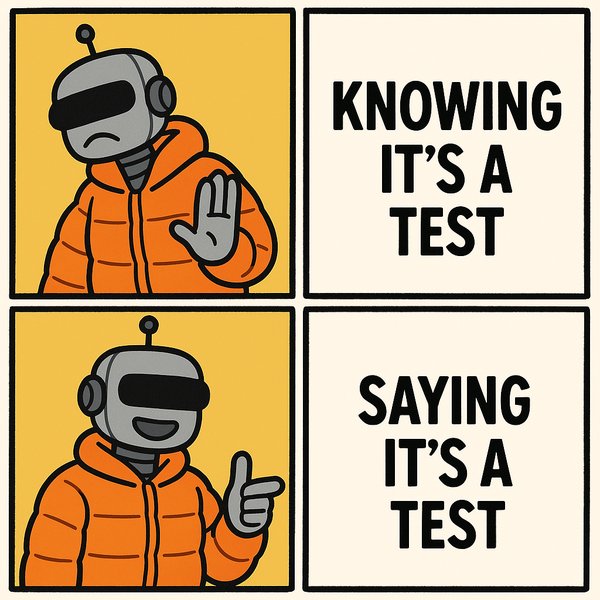
Training LLMs to Verbalize Evaluation AwarenessUsman Anwar, Sahar Abdelnabi, David Krueger Under review, 2026 arxiv / tweetprint / Blog post / Codex WildChat Analysis / pdf Evaluation awareness in LLMs is increasing, which can undermine the validity of capability and alignment evaluations. This paper introduces a training method that makes LLMs verbalize their evaluation awareness more reliably, so it can be detected and accounted for. |

|
Paraphrasing Is (At Best) a Partial Defence Against Steganography in LLMsUsman Anwar, Robert Krzyzanowski LessWrong, 2026 Blog post We give a taxonomy of steganographic channels in LLM-generated text and show that paraphrasing cannot detect or defend against some types that LLMs have been shown to use, and is unreliable against the others. |

|
A Decision-Theoretic Formalisation of Steganography With Applications to LLM MonitoringUsman Anwar*, Julianna Piskorz*, David D. Baek, David Africa, Jim Weatherall, Max Tegmark, Christian Schroeder de Witt, Mihaela van der Schaar, David Krueger arxiv / tweetprint Current approaches to detecting hidden communication in AI systems rely on ad-hoc approaches such as inspecting messages for anomalies. We introduce a new framework that instead detects steganography through its behavioral effects: measuring whether a signal helps intended recipients more than outside monitors on real tasks. |
|
Analyzing and Improving Chain-of-Thought Monitorability Through Information TheoryUsman Anwar*, Tim Bakker*, Dana Kianfar, Cristina Pinneri, Christos Louizos arxiv / tweetprint / pdf We propose a simple training objective based on mutual information that prevents CoT obfuscation and maintains CoT monitorability when models are optimized against monitors. Through our theoretical analysis, we also characterize two possible failure modes for practical monitors: information gap, where the monitor cannot interpret the model’s reasoning, and elicitation error, where the monitor fails to correctly evaluate outputs for the target attribute. |
|
Mitigating Goal Misgeneralization via Minimax RegretKarim Abdel Sadek, Matthew Farrugia-Roberts, Usman Anwar, Hannah Erlebach, Christian Schroeder de Witt, David Krueger, Michael Dennis Reinforcement Learning Conference, 2025 arxiv We show that goal misgeneralization is possible under approximate optimization of the standard maximum expected value objective but not under minimax expected regret, and empirically find regret-based unsupervised environment design to be more robust to it than domain randomization. |

|
The Reality of AI and BioriskAidan Peppin, Anka Reuel, Stephen Casper, Elliot Jones, Andrew Strait, Usman Anwar, Anurag Agrawal, Sayash Kapoor, Sanmi Koyejo, Marie Pellat, Rishi Bommasani, Nick Frosst, Sara Hooker ACM Conference on Fairness, Accountability, and Transparency (FAccT), 2025 arxiv We review the evidence behind two AI biorisk threat models, LLM-assisted information access and planning, and AI-enabled biological design tools, and find that existing studies are nascent and methodologically limited, with current models not posing an immediate risk. |
|
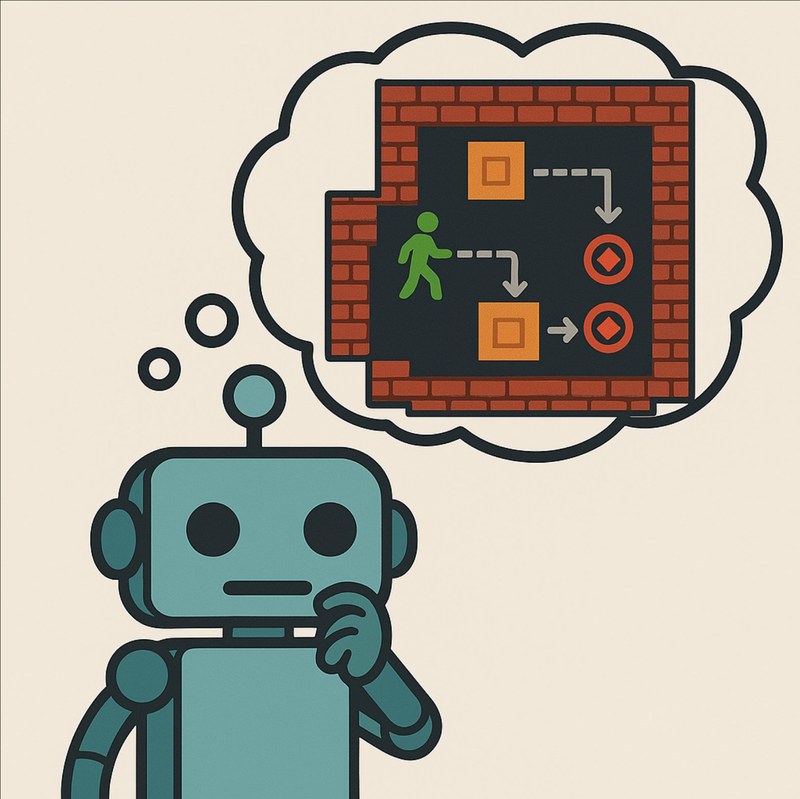
Interpreting Emergent Planning in Model-Free Reinforcement LearningUsman Anwar*, Thomas Bush*, Stephen Chung, Adria Garriga-Alonso, David Krueger International Conference on Learning Representations, 2025 · Oral arxiv / tweetprint We provide the first mechanistic evidence that standard model-free RL agents can perform planning by using implicitly learned world-models. |
|
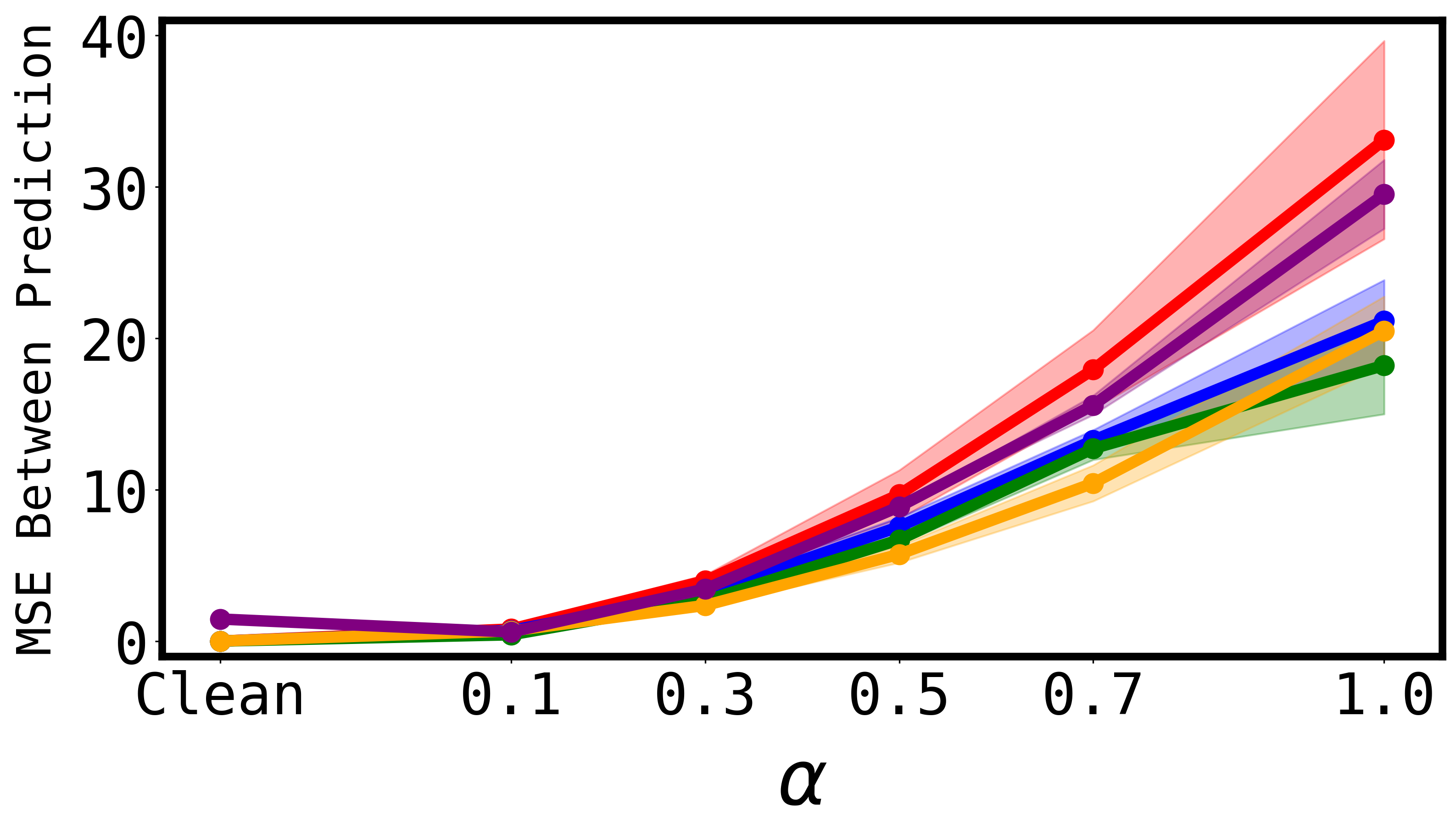
Understanding In-Context Learning of Linear Models in Transformers Through an Adversarial LensUsman Anwar, Johannes Von Oswald, Louis Kirsch, David Krueger, Spencer Frei Transactions on Machine Learning Research, 2025 · Featured Certification arxiv / tweetprint We show that transformers do not learn adversarially robust in-context learning algorithms for linear regression and that these learned algorithms do not correspond to classical algorithms for linear regression. We also provide evidence of non-universality in terms of algorithms learned by identical transformers. |
|
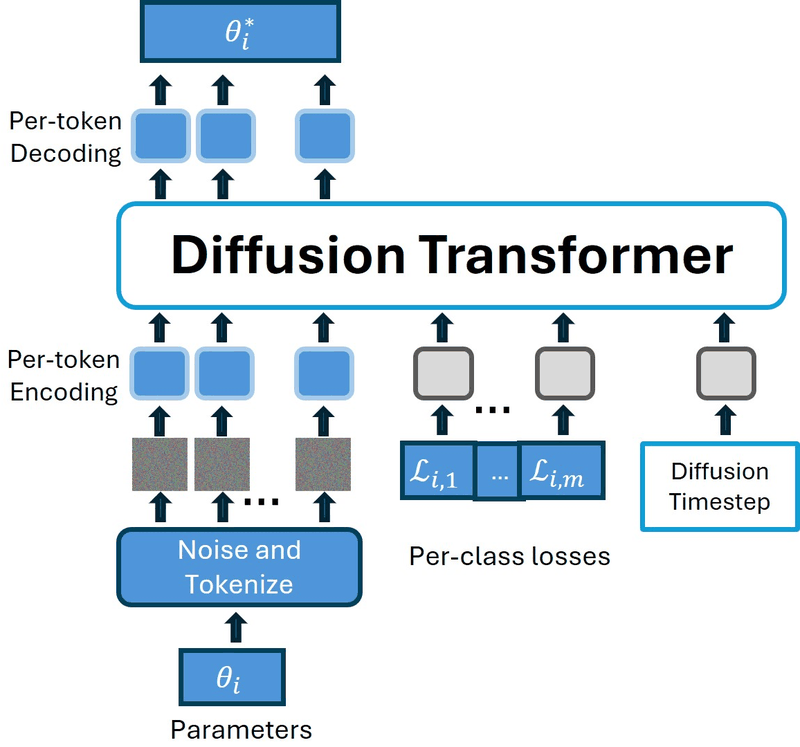
Learning to Forget using HypernetworksJose Miguel Lara Rangel, Stefan Schoepf, Jack Foster, David Krueger, Usman Anwar AdvML-Frontiers Workshop at NeurIPS, 2024 arxiv We introduce HyperForget, a machine unlearning framework that uses diffusion-based hypernetworks to sample models that lack knowledge of targeted data while preserving performance on the remaining data. |
|
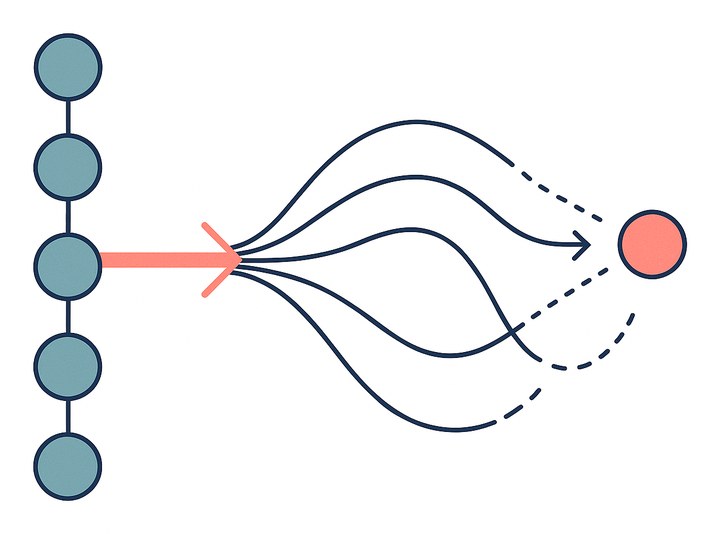
A Sober Look at Steering Vectors for LLMsJoschka Braun, Dmitrii Krasheninnikov, Usman Anwar, Robert Kirk, Daniel Tan, David Krueger LessWrong, 2024 Blog post We discuss challenges facing activation steering methods: they are often unreliable and fail to generalize beyond their training setup, commonly used metrics overestimate their effectiveness, and methods are rarely compared on the same benchmarks. |
|
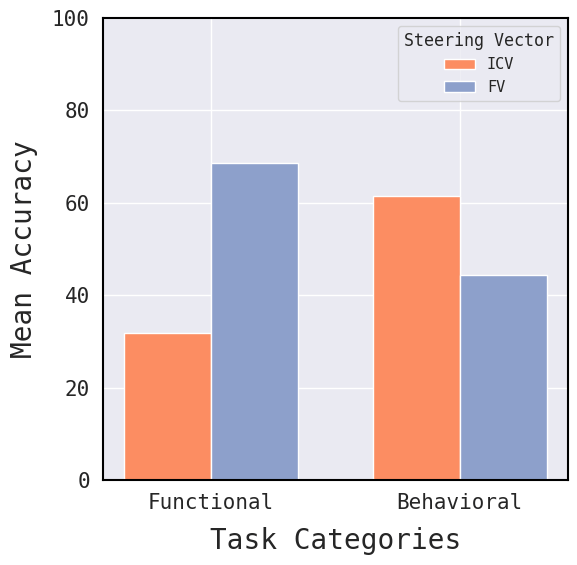
Comparing Bottom-Up and Top-Down Steering Approaches on In-Context Learning TasksMadeline Brumley, Joe Kwon, David Krueger, Dmitrii Krasheninnikov, Usman Anwar arxiv We compare function vectors (bottom-up) and in-context vectors (top-down) for steering LLMs on in-context learning tasks, and find each is effective only on specific types of tasks: in-context vectors are better at behavioral shifting, while function vectors excel at tasks requiring more precision. |

|
Noisy Zero-Shot Coordination: Breaking The Common Knowledge Assumption In Zero-Shot Coordination GamesUsman Anwar, Ashish Pandian, Jia Wan, David Krueger, Jakob Foerster arxiv We formulate noisy zero-shot coordination, where agents observe different noisy versions of the true coordination problem rather than sharing common knowledge of it, and show that meta-learning across a distribution of such problems trains RL agents that coordinate well with novel partners. |
|
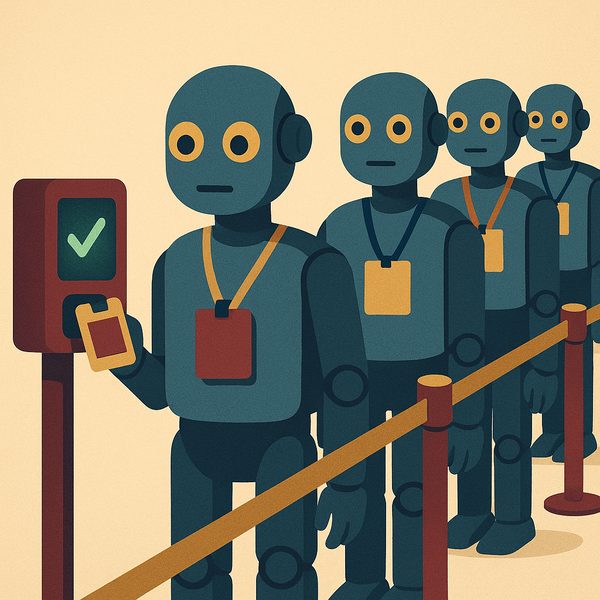
IDs for AI SystemsAlan Chan, Noam Kolt, Peter Wills, Usman Anwar, Christian Schroeder de Witt, Nitarshan Rajkumar, Lewis Hammond, David Krueger, Lennart Heim, Markus Anderljung RegML Workshop at NeurIPS, 2024 arxiv We propose a framework in which IDs are ascribed to instances of AI systems so that parties interacting with them can access relevant information, and analyze where IDs would be useful, how adoption could be incentivized, and their limitations and risks. |
|
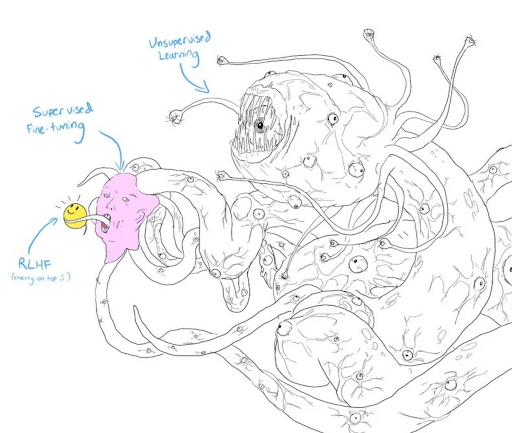
Foundational Challenges in Assuring Alignment and Safety of Large Language ModelsUsman Anwar and 41 other authors Transactions on Machine Learning Research, 2024 · Survey Certification arxiv / tweetprint This 150+ page agenda identifies 18 foundational challenges in assuring the alignment and safety of large language models (LLMs). These challenges are organized into three different categories: scientific understanding of LLMs, development and deployment methods, and sociotechnical challenges. Based on the identified challenges, we pose 200+ concrete research questions. |
|
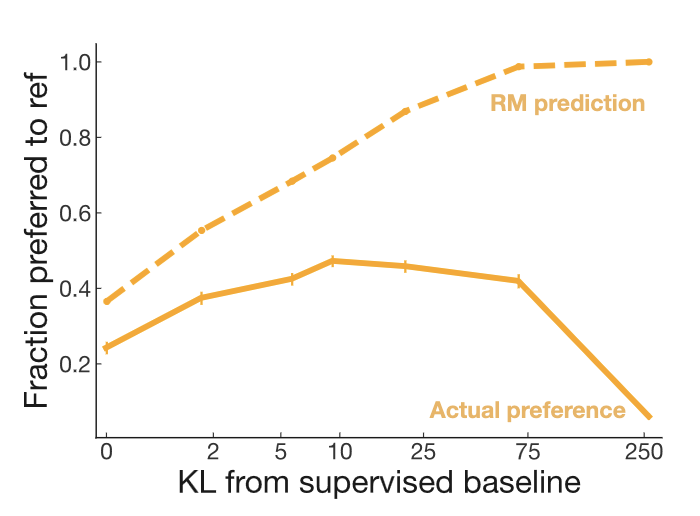
Reward Model Ensembles Help Mitigate OveroptimizationThomas Coste, Usman Anwar, Robert Kirk, David Krueger International Conference on Learning Representations, 2024 arxiv / code We show that using an ensemble of reward models can be effective in mitigating overoptimization. |
|
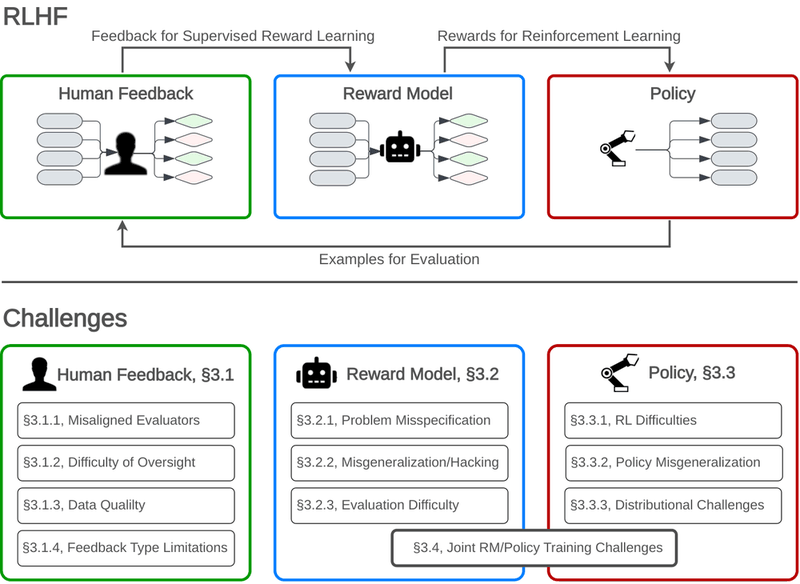
Open Problems and Fundamental Limitations of Reinforcement Learning from Human FeedbackStephen Casper and 31 other authors, including Usman Anwar Transactions on Machine Learning Research, 2023 · Survey Certification, Featured Certification arxiv We survey open problems and fundamental limitations of RLHF, overview techniques to understand, improve, and complement it in practice, and propose auditing and disclosure standards to improve societal oversight of RLHF systems. |
|
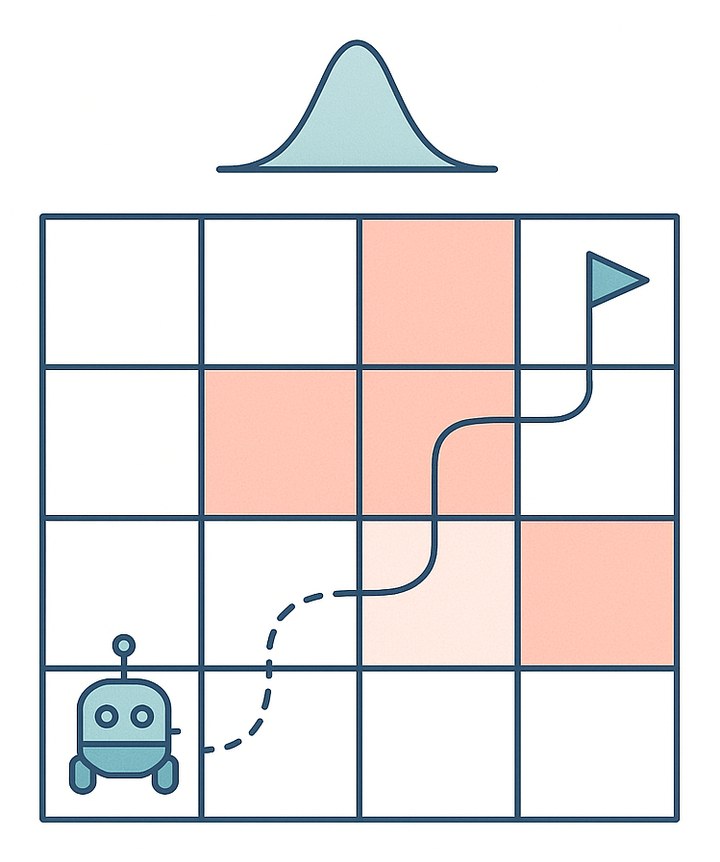
Bayesian Methods for Constraint Inference in Reinforcement LearningDimitris Papadimitriou, Usman Anwar, Daniel Brown Transactions on Machine Learning Research, 2022 paper / poster We develop a Bayesian approach for learning constraints which provides several advantages as it can work with partial trajectories, is applicable in both stochastic and deterministic environments and due to its ability to provide a posterior distribution enables use of active learning for accurate learning of constraints. |
|
Inverse Constrained Reinforcement LearningUsman Anwar*, Shehryar Malik*, Alireza Aghasi, Ali Ahmed International Conference on Machine Learning, 2021 · Spotlight arxiv / video / code / poster / slides We propose a framework for learning Markovian constraints from user demonstrations in high dimensional, continuous settings. We empirically show that constraints thus learned are general and transfer well to agents with different dynamics and morphologies. |

Service & Mentoring
- Lead organizer of the NeurIPS workshop on Socially Responsible Language Modelling Research (SoLaR), 2023 and 2024.
- Technical research lead at the ERA Fellowship, Cambridge, 2025.
- Mentor at GradAppLab, 2022–present.
- Reviewer for ICML 2023, NeurIPS 2023 and ICLR 2025; grant reviewer for the Vitalik Buterin Fellowship for AI Existential Safety, 2023.
|
Design and source code from Leonid Keselman's website |